
About
A small studio with
a few busy printers.
Casopia started the way most printing studios do — with one machine, a lot of failed prints, and a slowly growing pile of things that finally came out right.
Today we run a small farm of modern FDM printers, shipping across India. Most of what we make doesn't exist until someone asks for it: replacement parts nobody sells any more, personalised gifts, prototypes, props, and the unglamorous brackets that quietly fix a problem around the house.
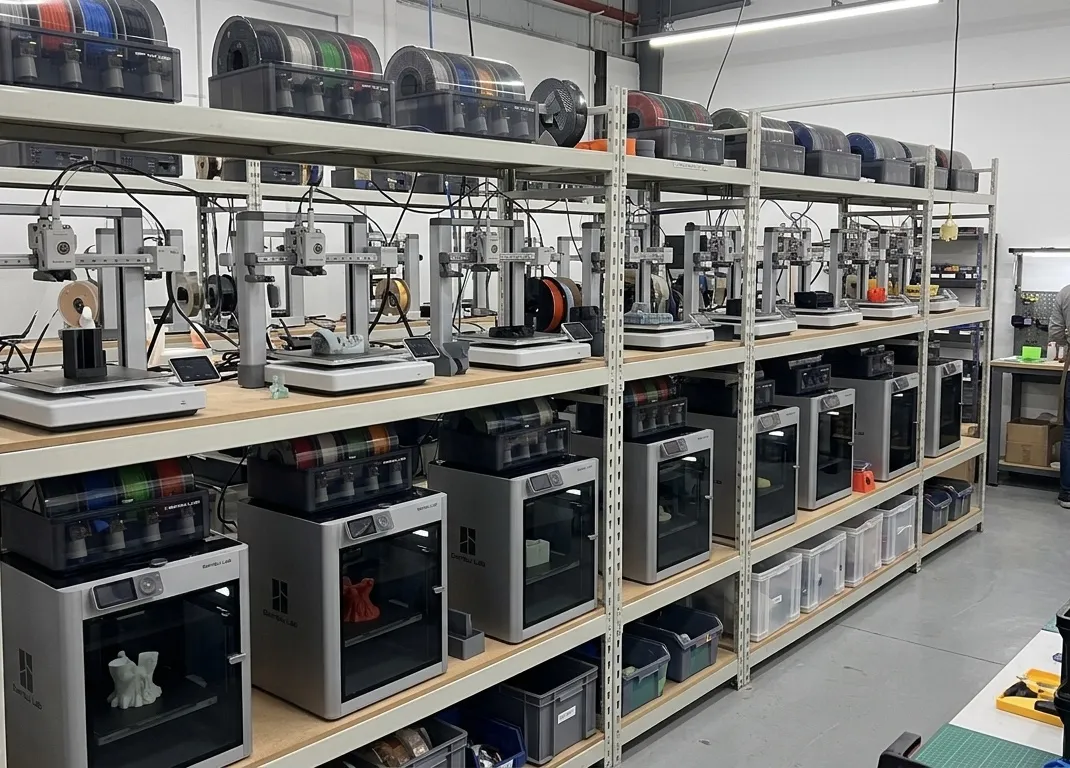
Running several machines means we can take on batches, keep lead times short when orders overlap, and print a single piece as large as 340 × 320 × 340 mm — with bigger work split and joined so the seam doesn't show.
Printing to order means less waste and more flexibility. It also means we can change a dimension, swap a colour or scale a model up because you asked — which is usually where the interesting work starts.
How we work
- Printed to order
- Most pieces ship in 3–5 days. Larger or custom work takes a little longer, and we will tell you upfront.
- Large formats, in one piece
- Our largest machine prints up to 340 × 320 × 340 mm without splitting — about the size of a basketball. Bigger than that, we section it and join it cleanly.
- Plant-based by default
- We print in PLA — made from corn or sugarcane starch rather than crude oil. Other materials are available when a job genuinely needs them, but PLA covers almost everything we make.
- Honest about limits
- 3D printing is not right for everything. If a piece would come out weak, ugly or far too expensive, we will say so rather than take the order.
Printed in plants, not petroleum
We print in PLA. Unlike most plastics, it isn't made from crude oil — it's polymerised from plant sugars, typically corn or sugarcane starch. It takes noticeably less energy to produce than petroleum plastics, and the crops it comes from grow back.
PLA is also industrially compostable. In a commercial composting facility, held at around 60°C, it breaks down into water and carbon dioxide over a few months — a genuine end-of-life path that oil-based plastics simply don't have.
We'd rather be accurate than flattering about this: that process needs sustained industrial heat. PLA won't break down meaningfully in a home compost heap, and in landfill it behaves much like any other plastic. The honest claim is that it's renewable at the start of its life and compostable at the end of it — not that it vanishes on its own.
Printing only to order matters here too. Nothing is mass-produced into a warehouse hoping to sell, so we aren't throwing away unsold stock.
Get in touch
Questions about a piece, a bulk order or something you want made — WhatsApp is fastest.